Creative producer
Owns the internal brief — default anchor.
COMPETITIVE SIMULATION · 5 ROLES · 10–90 PLAYERS
Three rounds. Five roles. Everyone holds a different slice of the picture — share it or hoard it.
Quick answer
83%
of product decisions lean on stale market data (McKinsey, 2024)
2×
faster cycles when external signals integrate with internal data
5
signal types in play — most teams only unlock two early
Your team starts from the brief — but the market may already have moved on. This simulation makes that gap visible.
Teams default inside-out: internal titles, last year's plan, comfortable categories. Market Sense makes the cost visceral through rounds and a live leaderboard.
The OTT theme removes domain posturing — decisions mirror real intelligence-sharing dynamics: what you read, what you share, what you ignore.
Structured phases keep energy and learning tight — from brief through play to debrief.
Round 1 · 13m
Pick two of five signal categories blind — market reality reveal shows the cost of comfortable picks.
Inside-out default
Round 2 · 15m
Broadcast window — share one datapoint or hoard. Strategic sharing lifts everyone; hoarding caps upside.
Intelligence sharing
Round 3 · 14m
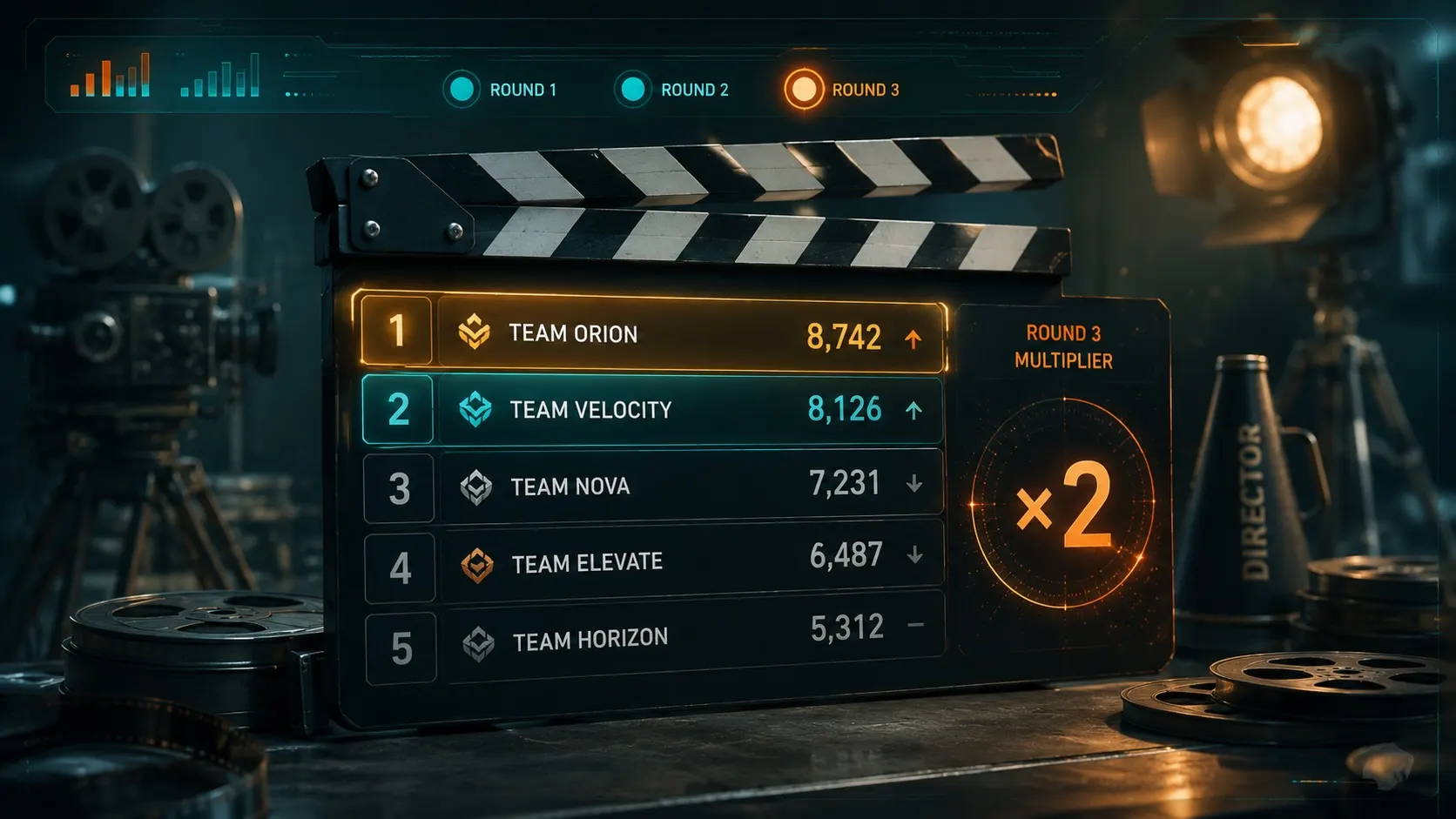
All five signals unlock — rewrite the brief before submit. Scores 2×; leaderboard reshuffles visibly.
Brief revision
Consequence: Often misaligns with market reality in reveal.
Consequence: Higher learning, messier start.
Owns the internal brief — default anchor.
Who is actually available right now.
What audiences are watching — demand signal.
Fee benchmarks — pricing reality.
What the platform will greenlight — the high-value late ask.
Round scores, selected signals, what was broadcast, and Round 3 2× weighting.
Round 1 brief quality
Vs. market reality
Round 2 broadcast impact
Shared vs. hoarded
Round 3 score
×2 multiplier
Brief delta
R1 vs. R3 rewrite
Keeps intel — strong early, loses collective lift.
Gifts competitors — asymmetry breaks.
Trades one reveal for two returns.
Decodes everything — time runs out on Round 3 rewrite.
A competitive strategy simulation where cohorts allocate resources against shifting market data and rival actions. Outcomes reward early pattern recognition and disciplined pivots.
Product, strategy, and general management teams who need shared language for market signals — not just retrospective case analysis.
Facilitators connect in-simulation bets to real planning cycles: when teams overweight lagging indicators, ignore weak signals, or chase competitors without a thesis.
Book a facilitated session — we'll match group size, format, and outcomes to the right simulation.